
Resources & Production Chains
Raw material becomes a usable resource only after it is researched, refined or combined; every building also draws water, power or compute, and losing any of the three triggers system failure.
Star Trek: Outposts Unknown ships with more than 55 unique resources, and the number is the point: the game wants you to feel a logistics problem rather than a shopping list. Every material has to be researched before it is useful, harvested from a specific place, often refined or combined with something else, moved between facilities, and finally spent on science. Understanding that chain — and where it breaks — is most of the skill in the first ten hours.
Four tiers of material
The game does not print a single taxonomy, but the resources fall into four practical groups, and each one behaves differently when you are short of it.
| Tier | Examples | Where it comes from | What it is for |
|---|---|---|---|
| Raw | Metal, ore, ice, biological specimens | Geological features, glaciers, steam fields | Feeding collectors and processors |
| Refined | Polyalloy, duranium | Refining raw stock | Structures, upgrades, conduits |
| Advanced | Dutronic chips, memory banks | Multi-step processing | Research facilities, shields, vehicles |
| Utility | Water, power, compute | Wells, generators, network infrastructure | Every building's upkeep |
The names matter because the tooltips use them. Hover any resource and the game tells you where it can be found or produced — that tooltip is the single most useful screen in the build, and it is why "where do I get duranium" is a question you can answer yourself in ten seconds.
The three upkeeps nobody plans for
Water, power and compute are not resources you spend once. They are continuous draws, and the pipes and conduits that carry them occupy physical space in an outpost that never feels large enough.
- Water feeds crew needs and several advanced processes. A water outage is a slow crisis: nobody dies immediately, everybody gets worse.
- Power gates production buildings. A power outage stops work outright and starts the slide toward system failure.
- Compute gates research. This is the one players forget, because a lab looks finished when it is built.
A production chain, end to end
Take the simplest real chain on Daegus. A metal collector pulls ore from a nearby geological feature. The ore goes to a refinery, which turns it into a usable metal product. That product goes into structure upgrades and into conduits for the utility network. Every step needs a crew assignment and a route, and the route is limited by what you have built between the two ends.
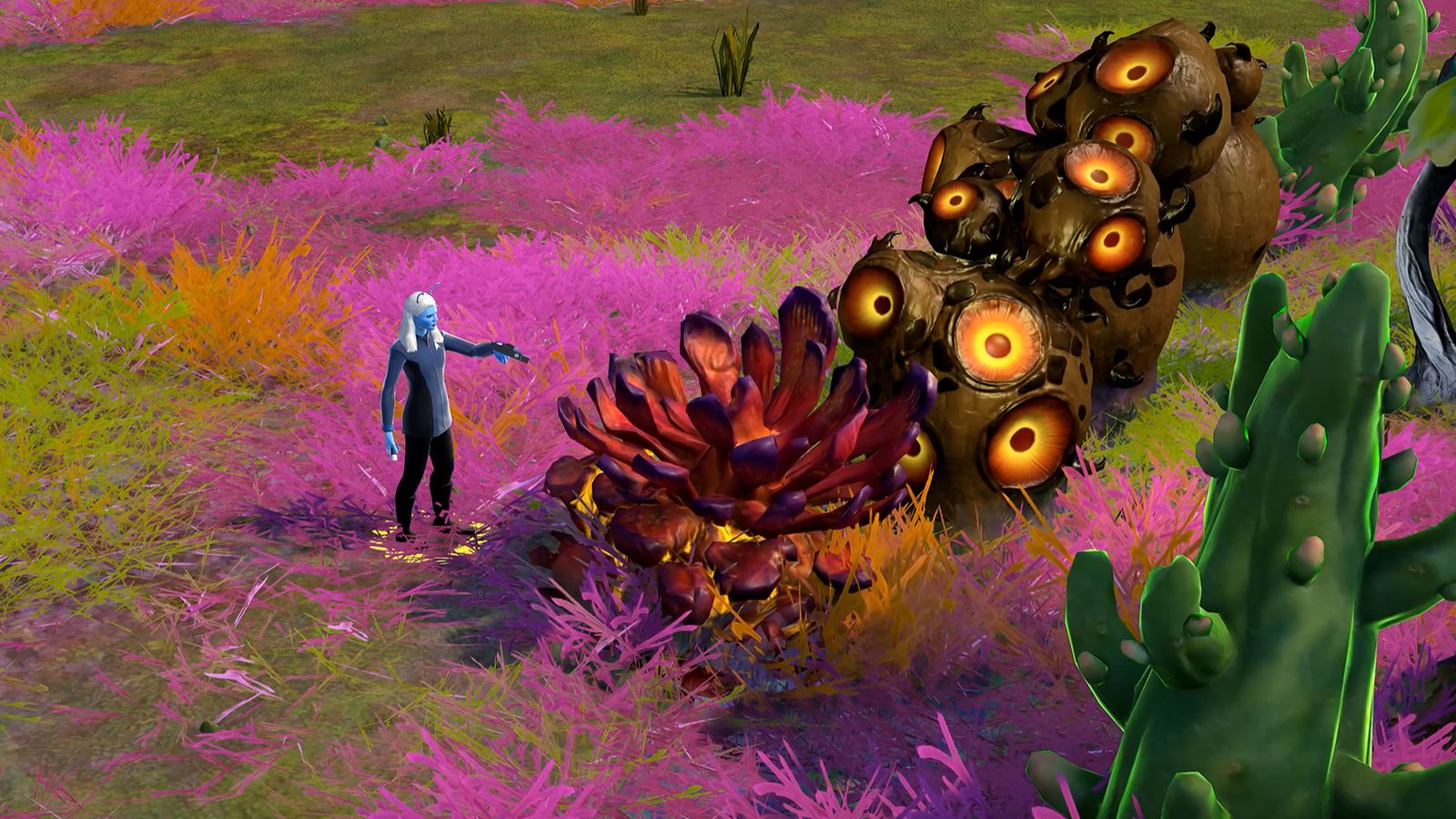
Storage filters and per-resource panels keep a large base readable. Official media: Magic Fuel Games / Playstack.
When a chain stalls there are only four causes: no input, no worker, no route, or no storage space. Work through them in that order and you will diagnose faster than by watching the numbers.
Storage, filters and the overflow trap
Storage is not a single number. Once your base grows you get dedicated storage structures and a filter panel, and setting those filters is what stops a hauling crew from filling your only depot with stone while the refined stock overflows somewhere else.
Practical priority for filters: refined and advanced materials first, raw bulk last. Raw material is replaceable and heavy; a lost batch of dutronic chips is a lost hour of processing.
What to prioritise when everything is short
| Priority | Resource | Why it comes first |
|---|---|---|
| 1 | Water | Every crew need feeds off it; outages cascade |
| 2 | Power | Unlocks production uptime |
| 3 | Metal / ore | The base currency of every structure |
| 4 | Compute | Research cannot progress without it |
| 5 | Organics | Food quality, regrowth, biological research |
| 6 | Rare materials | Shield emitters, vehicles, advanced upgrades |
Rare materials sit last only because they are not needed on day one. From the moment you want shields or air vehicles they jump to priority two, and the outposts that plan for that — by stockpiling early — are the ones that do not stall at the first rift event.
Interplanetary transfer is a strategy, not a patch
Each planet has local shortages. The Resonant and the transfer system exist so you can fill them from elsewhere: haul surplus from a mature outpost to a new landing rather than rebuilding a supply chain from scratch. That is the intended answer to "the new planet has no ice", and it is much cheaper than trying to make every outpost self-sufficient on day one.
Treat self-sufficiency as a mid-game goal and the early game becomes far less punishing.